The Real Reason You Dream of Your Teeth Falling Out
A surprising link between dreams, breathing, and the health of your mouth
April 24, 2026
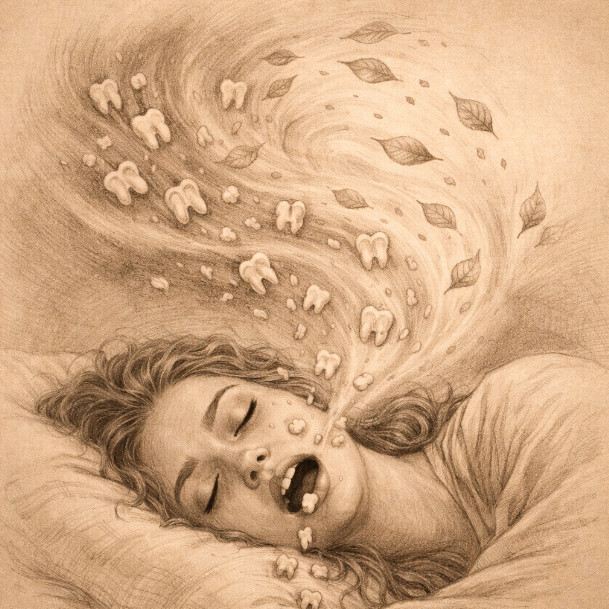
Few dreams are as universal and alarming as the crumbling sensation of your teeth as they begin to loosen and fall away. At first, perhaps you feel a tooth wobble under your tongue. Then another. Soon your whole mouth is decaying, your teeth falling out in pieces. The sensation is so physical that you wake with a a deep sense of unease, and the question: what does it mean?
Because the teeth-falling-out dream is so vivid, people assume it must carry a powerful symbolic message. Teeth are tied to our appearance, our speech, our age, our sense of strength. It is easy to imagine that such dreams reflect anxiety or loss of youth, beauty, even of our very life. While at times those themes do resonate with the dreamer’s waking life, there is a simpler explanation. When we consider how dreams actually arise, another layer of explanation is plausible, one rooted in the living body during sleep.
The dream-body connection
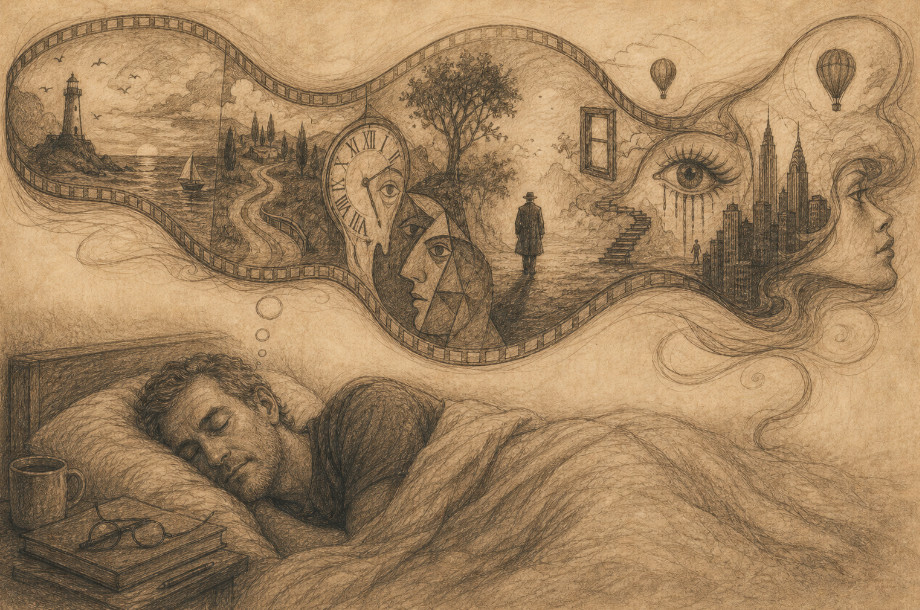
Dreaming does not unfold apart from the body. Even in the depths of sleep, the brain continues to receive a steady stream of sensory information. In the mouth, sensations of pressure, dryness, irritation, the rhythm of breathing, and the position of muscles and joints all continue to flow through the nervous system. The dreaming mind, with its remarkable capacity for imagery, gathers these signals and shapes them into scenes and experiences that feel meaningful from the inside.
We see this process everywhere in dreaming. A full bladder becomes a frantic search for a bathroom. A noise from the world outside the bedroom finds its way into the unfolding story: the alarm clock becomes a church bell, for example. A blanket wound around the legs becomes standing in a tangle of snakes. The mind does not ignore the body during sleep; it incorporates it, translating sensation into image.
The mouth is one of the most sensitive regions of the body. The teeth, gums, tongue, and jaw are threaded with nerves that detect the slightest change in pressure or tension. When those sensations arise during sleep, the dreaming mind may give them shape through imagery that mirrors the experience itself. Pressure along the jaw may evoke a dream of teeth cracking or shifting. Irritation in the gums may take form as a tooth loosening or falling away.
Perhaps check with your dentist, not your therapist
Dentists have begun to recognize just how closely oral health and sleep physiology are intertwined. The mouth can reveal a great deal about what the body is doing overnight. The tissues of the mouth and airway are deeply involved in breathing patterns, muscle tone, and jaw position during sleep. When those systems become disrupted, the signs often appear first in the mouth.
One of the most common examples is sleep bruxism: the grinding or clenching of teeth during the night. Many people assume grinding simply reflects daytime stress, yet sleep specialists have found that it often accompanies unstable breathing during sleep. When the airway begins to narrow, the brain sometimes activates the jaw muscles in an effort to stabilize the airway and reopen the passage for air. The jaw tightens, the teeth press together, and the cycle can repeat many times throughout the night.
Within the imaginative landscape of dreaming, these sensations may appear in alarming ways. The pressure of grinding can become the feeling of teeth splintering, cracking, or dropping from the mouth as the dream gives form to what the body is experiencing.
Dentists often recognize other signs that sleep may be less restorative than it appears. Flattened chewing surfaces, chipped enamel, or hairline fractures in the teeth can reflect long-standing grinding. A scalloped tongue, its edges gently pressed by the teeth, can suggest persistent muscular tension during sleep. Dry mouth upon waking, inflamed gums, or morning jaw soreness may point toward mouth breathing or repeated brief awakenings through the night.
Mouth breathing plays an important role in this story as well. Saliva normally protects the teeth and regulates the oral microbiome, bathing the mouth with antimicrobial compounds and buffering the acids that bacteria produce. During sleep, saliva production naturally declines. When breathing shifts to the mouth for long stretches, tissues dry out more easily and inflammation can take hold.
From the perspective of sleep physiology, mouth breathing also affects the stability of the airway. Nasal breathing helps regulate airflow and supports the tone of the airway throughout the night. When breathing occurs primarily through the mouth, the airway becomes more vulnerable to narrowing and collapse, contributing to snoring and obstructive sleep apnea.
Even small dental problems can interfere with rest in ways people rarely suspect. A mild cavity or irritated tooth may barely register during the day, when attention is scattered across countless tasks. In the stillness of night, those signals can become more noticeable. A few simple habits can support both oral health and sleep quality: flossing before bed, staying hydrated, developing awareness of breathing patterns during the day, and seeking professional help if needed.
When teeth fall out in a dream, the image may indeed be a metaphor for something being lost or decayed in waking life. Alternatively, the dream may be reflecting the physical body. This flow from body sensation to dream image can warn of many other health conditions beyond sleep apnea and oral health.
Dreams and the body: Early warning signs
According to neurologist Oliver Sacks, dreams are, “directly or distortedly, reflections of current states of body and mind.” They can reflect neurological disorders, which he said can alter dreaming processes in specific ways. For example, the loss of visual imagery in dreams is a possible precursor to Alzheimer’s, and recovery dreams can presage remission from multiple sclerosis. Sacks hypothesized that the dreaming mind is more sensitive than the waking mind to small changes in the body, and can appear prescient because it picks up subtle early cues.
So when you dream of your teeth falling out, or other alarming physical experiences, consider the obvious first. The dream may be simply listening to your body and presenting an image of what it hears.